
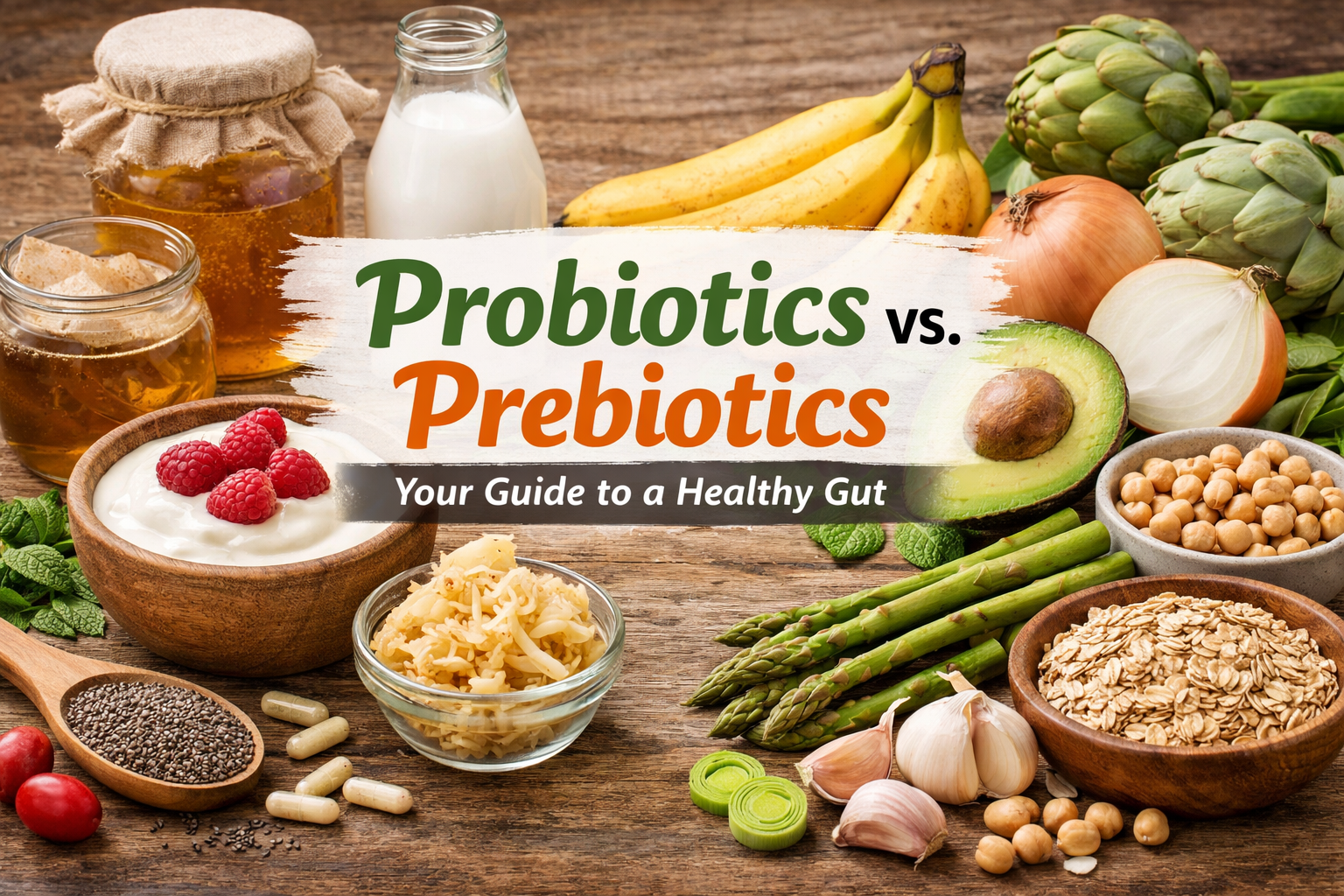
Probiotics vs. Prebiotics: Your Guide to Supporting a Healthy Gut
What are probiotics?
Probiotics are live microorganisms (mostly beneficial bacteria and yeast) that can support your gut health. As a popular clinic explains, “Probiotics are live bacteria and yeasts that have beneficial effects on your body… They help fight off the less friendly types and boost your immunity against infections.” In other words, probiotic foods and supplements add friendly microbes to your gut, which can strengthen your gut’s microbial community.
Probiotics “take up residence” in your gut and help crowd out harmful bacteria or yeasts that might cause problems. They’re often used to prevent or treat gut imbalances (dysbiosis) – for example, after a course of antibiotics. A healthy, balanced microbiome can “boost your overall immunity, reduce inflammation and help keep your bowels regular”. In fact, studies suggest probiotics may help prevent diarrhea (e.g. from infections or antibiotics), improve IBS symptoms, boost immune function, and reduce inflammation.
What are prebiotics?
Prebiotics are non-digestible fibers and compounds in food that “feed” your good gut bacteria. Unlike probiotics, prebiotics are not live organisms themselves; they’re the fuel those organisms thrive on. In practice, prebiotic-rich foods are high-fiber plant foods: fruits, vegetables, legumes, whole grains, nuts and seeds. Harvard Health notes that a high-fiber diet “can alter the gut microbiome to support the immune system and protect against inflammation”. In other words, fiber helps beneficial microbes grow and produces healthful byproducts (like short-chain fatty acids) that calm gut inflammation and nourish the lining of the intestine.
Because prebiotics are fiber-rich, it’s important to increase intake gradually. A sudden jump in fiber can cause gas and cramping. For example, Harvard experts advise adding new fiber foods slowly (e.g. one extra serving of vegetables per day) and drinking plenty of water. Over time, your gut bacteria adapt and help your digestive system run more smoothly.
How do probiotics and prebiotics benefit your gut?
Both probiotics and prebiotics support a balanced, resilient microbiome. A robust gut microbiome influences many aspects of health, from digestion to immunity. By improving microbiome balance, probiotics and prebiotics can help your immune defenses, nutrient absorption, and gut barrier function.
Supporting immunity: A healthy gut microbiome “boosts your overall immunity” by interacting with immune cells in the intestines. Probiotics can help prime your immune system to fight infections, while prebiotic fiber nourishes immune-regulating bacteria.
Improving digestion and regularity: Probiotics aid digestion by breaking down food components and helping maintain normal bowel habits. Prebiotic fiber adds bulk to stool and feeds microbes that produce beneficial compounds. A high-fiber (prebiotic) diet is linked to healthier stools and lower constipation risk.
Reducing inflammation: Certain gut bacteria produce anti-inflammatory molecules when fed prebiotic fiber. Probiotics and prebiotics together can help calm chronic gut inflammation that underlies issues like IBS or colic.
What foods contain probiotics or prebiotics?
You can get both probiotics and prebiotics from everyday foods. Below are examples:
Probiotic-rich foods (contain live cultures): yogurt (with live active cultures), kefir, sauerkraut, kimchi, kombucha, miso, tempeh, cottage cheese, pickles (fermented), and other fermented foods. These foods introduce beneficial bacteria into your gut each time you eat them.
Prebiotic-rich foods (high in fermentable fiber): bananas, onions, garlic, leeks, asparagus, artichokes, dandelion greens, oats, barley, legumes (beans, lentils, peas), whole grains, nuts, and seeds. These foods are not digested in the stomach but reach the colon, where gut bacteria feed on them.
Fiber-rich fruits and vegetables: Any fruits and veggies count. For example, berries, apples, broccoli, Brussels sprouts, and carrots are good sources. Harvard Health notes that Americans should aim for 28–34 grams of fiber per day, but most get far less. Gradually adding servings of fruits, vegetables, whole grains, and legumes helps meet that goal.
Should I take probiotic or prebiotic supplements?
Supplements can help, but they’re not required for everyone. Food first is the rule. Probiotic supplements contain specific strains of bacteria, but they are not regulated by the FDA, so quality varies. It’s best to consult a healthcare provider before starting them, especially if you have health issues or a weakened immune system. If you do take probiotics, choose products that list the strains (e.g. Lactobacillus acidophilus, Bifidobacterium longum, etc.) and store them properly.
Likewise, fiber supplements (e.g. psyllium husk powder) are available but should not replace whole foods. Fiber supplements can boost intake if you can’t meet fiber needs through diet, but they lack the vitamins and polyphenols of real fruits and grains. If you add a fiber supplement, increase slowly and drink water, just as with dietary fiber.
In general, try first to get probiotics and prebiotics from foods: eat fermented yogurt or kefir, chew on kimchi or sauerkraut, and fill meals with whole grains, beans, fruits and vegetables. As an expert clinic notes, “Most importantly, eat a diet rich in nutrients and high in fiber – including fruits, vegetables and whole grains. Probiotics feed off of fiber and build colonies that will keep your gut in a healthy balance.” Supplements can be added if needed, but focus on a balanced, fiber-rich diet first.
Tips for a gut-friendly routine
Start slow: If you’re new to fermented foods or high-fiber meals, add them gradually. For example, begin with one extra serving of veggies or a small cup of yogurt per day. Over weeks, your gut will adapt and bloating/gas should subside.
Stay consistent: Regular intake of probiotics (e.g. daily yogurt or kombucha) and fiber (vegetables or a serving of beans at meals) keeps gut microbes well-fed. Consistency is more important than perfection.
Eat diverse plants: Aim for many colors and types of fiber. Harvard experts suggest eating a variety of fiber foods rather than fixating on a single “magic” food. For example, rotate between berries, leafy greens, legumes, and whole grains throughout the week.
Hydrate: Drinking enough water is key when increasing fiber, as it helps fiber move through the gut. Insufficient fluid can worsen bloating.
Mind probiotic timing: Probiotic supplements or foods are often best taken with meals (per some manufacturers) to improve survival of the bacteria through the stomach. Check product instructions or take fermented foods with a meal.
Watch your body: Probiotics are generally safe for healthy people, but some may experience mild gas or upset stomach at first. Prebiotics (fiber) can cause gas if added too quickly. If symptoms occur, slow down and spread intake over the day.